
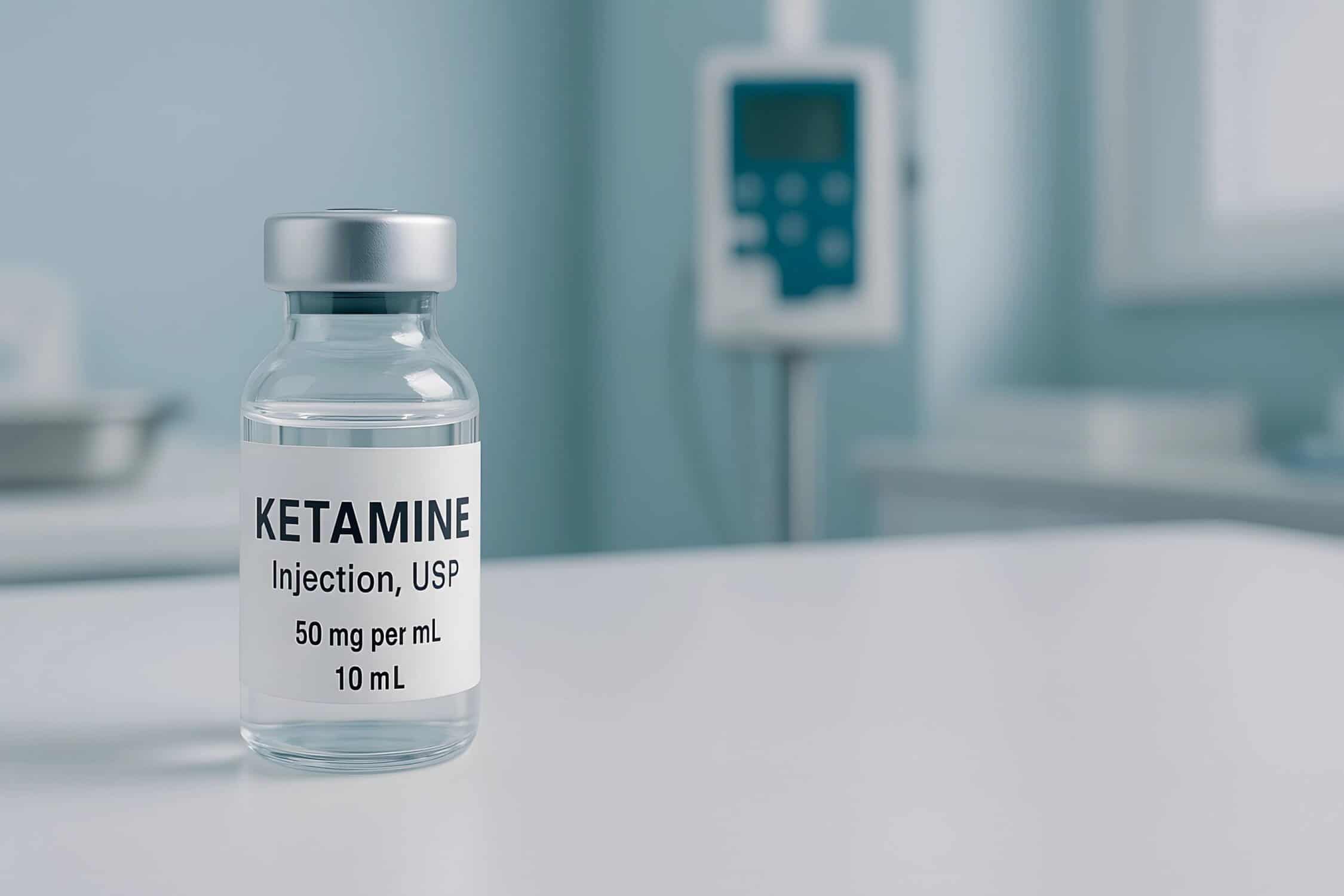
If you’re hearing more and more about ketamine lately, you’re not alone. What was once known primarily as a powerful anesthetic used in hospitals is now gaining attention as a groundbreaking treatment for severe depression and other mental health conditions. But with this new hope comes a lot of questions and uncertainty. You might be wondering if it’s safe, how it works, and what the real risks are. It’s completely understandable to feel both curious and cautious.
Sorting through the information can be overwhelming, especially when you’re trying to find real answers for yourself or a loved one. Our goal is to walk you through this topic with clarity and compassion. We’ll explore what ketamine is, its benefits, its risks, and how it’s being used today. We want to give you a clear, honest picture so you can feel more informed and confident in understanding this complex but promising option.
What do we know about the benefits of ketamine?
It’s natural to ask about the benefits of any treatment, and with the ketamine drug, the conversation is especially important. First developed in the 1960s, ketamine therapy was originally used as an anesthetic for medical procedures. Its ability to provide pain relief and sedation without suppressing breathing made it a valuable tool in operating rooms and emergency settings. For decades, that was its primary role. However, over time, researchers began to notice its profound effects on the brain, leading to new explorations of its potential therapeutic uses.
Today, one of the most significant benefits we’re seeing is its effectiveness for treatment-resistant depression. This isn’t just a small improvement; for many patients who have tried multiple other antidepressants without success, ketamine therapy can be life-changing. Research has shown that a single low-dose infusion can produce rapid antidepressant effects, with some studies reporting a response rate greater than 60% within just a few hours. This is a remarkable development for individuals who have felt stuck in the cycle of depression for years.
Beyond depression, ketamine therapy is also showing promise for other challenging conditions. It is being used to help patients manage chronic pain, offering a different kind of analgesia when other pain-relief methods have failed. Additionally, it’s being explored as a treatment for other psychiatric conditions, including post-traumatic stress disorder.
For people struggling with the intrusive memories and hypervigilance of PTSD, understanding the complex symptoms of the condition is the first step, and treatments like ketamine may offer a new path toward healing. It’s important to remember, though, that the ketamine drug is typically considered only after other, more traditional treatments haven’t provided the needed relief. While the benefits are promising, it’s a serious medical treatment that requires careful consideration.
How does ketamine work?
So, how does ketamine actually work in the brain to produce these effects? It’s different from traditional antidepressants, which usually focus on neurotransmitters like serotonin or dopamine. Ketamine’s primary mechanism of action is as an N-methyl-D-aspartate (NMDA) receptor antagonist. That might sound technical, but we can break it down.
Think of your brain as having a complex communication network. One of the main messengers in this network is a neurotransmitter called glutamate. Glutamate is excitatory, meaning it helps keep your brain cells active and communicating. NMDA receptors are like docking stations for glutamate. When ketamine enters the picture, it temporarily blocks these docking stations. This blockade changes the flow of communication in the brain. It leads to a surge of glutamate release, which then activates other types of receptors.
This process is believed to trigger a cascade of events that helps the brain form new neural connections. In essence, it helps the brain become more adaptable and “rewire” itself, a concept known as neuroplasticity. For someone struggling with depression, where brain circuits can become rigid and stuck in negative patterns, this can be a powerful reset.
How ketamine can be administered
The ketamine drug can be administered in several different ways, and the chosen route has a major impact on its bioavailability, the amount of the drug that actually enters the bloodstream to have an effect. The method of administration also determines how quickly you feel its effects.
For example, oral ketamine has a much lower bioavailability because when you take it by mouth, it has to pass through the digestive system and the liver first. This is called “first-pass hepatic metabolism,” where a large portion of the drug is broken down before it even reaches the bloodstream. This is why other routes are often preferred in clinical settings to ensure a more predictable dose and effect. Here’s a comparison of the common methods:
| Route of administration | Bioavailability | Typical onset time |
|---|---|---|
| Intravenous (IV) | Bioavailability: 100% | Typical onset time: 1–5 minutes |
| Intramuscular (IM) | Bioavailability: 93% | Typical onset time: 5–15 minutes |
| Intranasal | Bioavailability: 45–50% | Typical onset time: 5–15 minutes |
| Oral | Bioavailability: 16–20% | Typical onset time: 20–60 minutes |
Side effects
It’s crucial to have an open conversation about the side effects of ketamine. Like any powerful medication, it comes with risks, and knowing what they are can help you make an informed decision with your healthcare provider. The adverse effects can be divided into non-psychiatric and psychiatric experiences, and they are quite common, especially during or shortly after treatment.
Common non-psychiatric side effects, affecting more than 10% of people, often include physical sensations like dizziness, blurred vision, nausea, and a temporary increase in blood pressure. These effects are typically managed by the clinical team and tend to fade as the drug wears off.
Psychiatric effects are also common, experienced by about 20-50% of patients. These can include confusion, a feeling of euphoria or elation, and difficulty concentrating. Some people describe a “dissociative” experience, where they feel detached from their body or their surroundings.
While this can be unsettling for some, it is an expected part of the treatment for others. More intense effects, such as hallucinations, are less common but are reported by 6-10% of individuals. These experiences are why medical supervision during and after administration is so important.
Urinary and liver toxicity
When we talk about the risks of ketamine, it’s important to distinguish between medically supervised, infrequent use and chronic, high-dose use. The most serious long-term effects are typically associated with the latter, often seen in cases of recreational abuse. One of the most well-documented long-term risks is urinary and liver toxicity.
Chronic use can lead to a condition sometimes called “ketamine bladder syndrome.” This involves severe inflammation and damage to the lining of the bladder, causing symptoms like frequent, painful urination and, in some cases, incontinence. It’s a serious condition that can cause lasting damage, with studies indicating that 20–30% of frequent users experience bladder-related complaints.
In addition to the bladder, the liver can also be affected. Hepatotoxicity, or liver injury, has been reported in about 10% of chronic high-dose users. The liver works hard to metabolize ketamine, and over time, this can lead to inflammation and damage.
Ketamine dependence and tolerance
Another important consideration is the potential for psychological dependence and tolerance. With repeated use, the body can build a tolerance to ketamine, meaning that larger doses are needed to achieve the same effects. This is a significant concern because increasing the dose also increases the risk of toxicity and other adverse effects. While physical dependence is less common than with substances like opioids, psychological dependence can develop. This is where a person feels a compulsive need to use the drug to cope with emotional or psychological issues.
This potential for dependence is why medical supervision is non-negotiable. In a therapeutic setting, doses are carefully controlled, and patients are monitored to prevent the development of tolerance and abuse. It’s a powerful tool, but it’s one that must be used responsibly. Understanding the risks associated with substance use, such as learning how alcohol can affect depression, highlights the importance of managing any treatment that carries a risk of dependence with professional guidance.
Recreational use of ketamine
Outside of its medical applications, ketamine has a history of recreational use, often as a “party drug” in nightclub and festival scenes. People who use it recreationally are typically seeking its dissociative and hallucinogenic effects. At lower doses, it can create a sense of detachment and euphoria. At higher doses, it can induce a profound and immobilizing state known as the “K-hole.”
A K-hole is an intense experience where a person feels completely disconnected from their body and reality. It can involve vivid hallucinations and a distorted sense of time and space. While some users seek this out, it can also be a terrifying and dangerous experience, leading to panic, confusion, and a total loss of motor control, making the person incredibly vulnerable. The risks associated with a K-hole are significant, including the potential for accidents and injuries while incapacitated.
While overall prevalence is relatively low, recreational use has been on the rise. The greatest danger often comes when ketamine is mixed with other substances, especially depressants like alcohol or opioids. Combining these drugs dramatically increases the risk of respiratory depression, where breathing can slow to a dangerously low rate. The U.S. Centers for Disease Control and Prevention (CDC) has noted that ketamine is often detected alongside other drugs in overdose deaths, highlighting the severe risks of mixing substances.
Frequently asked questions
The Food and Drug Administration has approved a nasal spray form of ketamine called esketamine for treatment resistant depression. This FDA approved medication is administered in certified clinics under medical supervision. Intravenous ketamine and oral ketamine are sometimes used off label to treat depression, but they are not specifically FDA approved for that indication. Ongoing research, including randomized controlled trials and systematic review studies published in journals such as CNS Neurosci Ther and Reg Anesth Pain Med, continues to evaluate its antidepressant like effects.
The Food and Drug Administration has approved a nasal spray form of ketamine called esketamine for treatment resistant depression. This FDA approved medication is administered in certified clinics under medical supervision. Intravenous ketamine and oral ketamine are sometimes used off label to treat depression, but they are not specifically FDA approved for that indication. Ongoing research, including randomized controlled trials and systematic review studies published in journals such as CNS Neurosci Ther and Reg Anesth Pain Med, continues to evaluate its antidepressant like effects.
Ketamine therapy is an innovative mental health treatment that uses low, controlled doses of ketamine to help relieve symptoms of depression, anxiety, PTSD, and other mood disorders. Unlike traditional antidepressants that can take weeks to work, ketamine therapy often acts much faster, sometimes within hours or days. It works by targeting glutamate, a neurotransmitter involved in mood regulation and brain connectivity. By stimulating new neural pathways, ketamine therapy may help “reset” patterns of negative thinking and emotional distress. Treatment is always administered in a medical setting under professional supervision to ensure safety and effectiveness.
Know the dangers and effects of the ketamine drug
Ketamine is a substance of dualities. On one hand, it’s a powerful medical tool that offers hope and rapid relief for people with treatment-resistant depression and other difficult conditions. On the other, it carries significant risks, including the potential for serious side effects, long-term toxicity, and dependence, especially when misused. Self-medicating or using it recreationally is incredibly dangerous. The difference between a breakthrough and a setback lies in the context of its use: a controlled, monitored, and supportive clinical environment.
Navigating mental health treatment can feel complicated, but you don’t have to do it alone. If you or someone you care about is struggling, the most important step is to reach out for professional help. At Red Ribbon Mental Health, our compassionate team is here to listen and guide you toward the right path for your unique needs. To learn more or to discuss your options, please give us a call at (317) 707-9706 or contact us. Taking that first step can make all the difference.
Sources
- Rosenbaum, S. B., et al. (01-30-2024). Ketamine. StatPearls. NCBI Bookshelf.
- Keel, H. B., et al. (01-30-2023). Ketamine toxicity. StatPearls. NCBI Bookshelf.
- Centers for Disease Control and Prevention. (11-07-2024). Notes from the field: Ketamine detection and involvement in drug overdose deaths. Morbidity and Mortality Weekly Report.
- National Institute on Drug Abuse. (04-09-2024). Ketamine. National Institute on Drug Abuse.
- Morgan, C. J. A., & Curran, H. V. (04-15-2011). The epidemiology and patterns of acute and chronic toxicity associated with recreational ketamine use. Emergency Medicine Journal.
- UC San Diego. (01-07-2025). Ketamine use on the rise in U.S. adults; new trends emerge. UC San Diego Today.
- Harvard Health Publishing. (08-09-2022). Ketamine for treatment-resistant depression: When and where is it safe?. Harvard Health.
- U.S. Food and Drug Administration. (10-10-2023). FDA warns patients and health care providers about potential risks associated with compounded ketamine products. U.S. Food and Drug Administration.
- Yale School of Medicine. (04-10-2023). Ketamine: Handle with care. Yale School of Medicine.
- Harvard Gazette. (09-25-2025). First study to compare two ketamine therapies for patients with severe depression. Harvard University.