
Neurofeedback therapy is a non invasive approach that helps retrain brain activity to support focus, emotional regulation, and overall well being. It is often used to address ADHD symptoms and other mental health conditions through structured brain training. Neurofeedback therapy is a non-invasive brain-training approach that’s gaining ground as an option for those looking to take a more active role in their healing. With the right information, you’ll see how it can help you find a sense of focus and calm, so you can be more present for yourself and those you care about. Let’s look at how this treatment works and whether it might be a practical step toward feeling better.
How does neurofeedback therapy work?
Neurofeedback therapy works by using sensors monitor systems that track electrical activity in the brain and translate it into auditory or visual cues. During a neurofeedback session, individuals interact with a computer-based program or video game that responds to their brain wave patterns in real time. This process uses operant conditioning, where positive feedback reinforces healthier patterns and improved brain function. Over time, neurofeedback training helps the brain self-regulate, improving cognitive control, emotional regulation, and mental clarity. Learn more about related therapy services and how you can get custom help.
What is neurofeedback therapy?
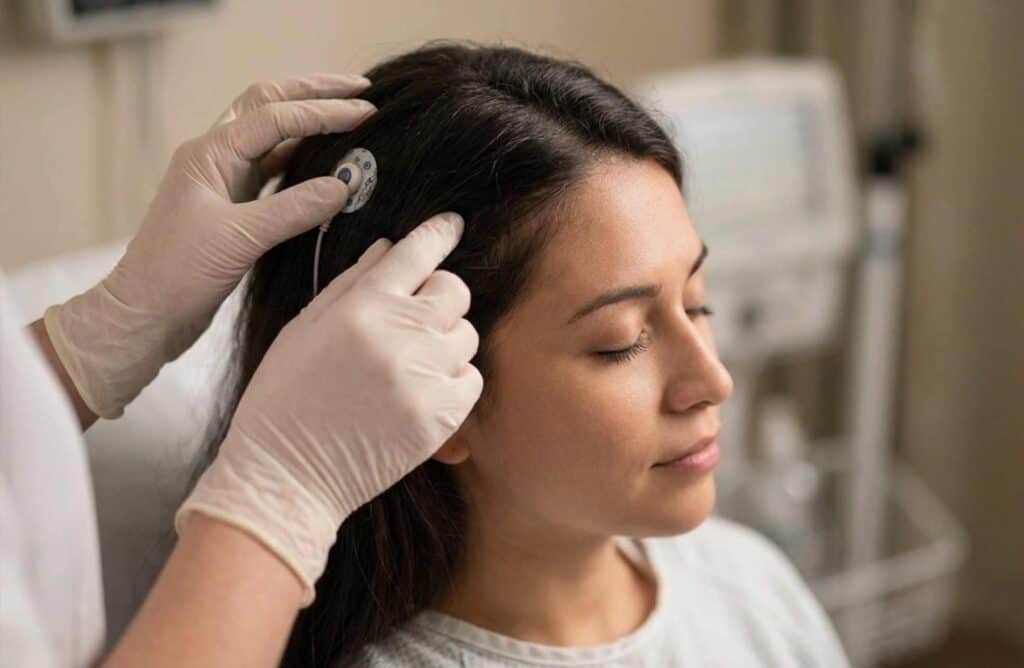
What is neurofeedback therapy exactly? It is a specialized form of EEG biofeedback that measures your brain activity. Small sensors, called electrodes, sit on your scalp. They read electrical signals as they happen.
These sensors only monitor your brainwaves. They do not send electricity into your head. This process is completely safe and painless. You can think of neurofeedback training as a practical workout for the mind.
It is a proven way to build mental resilience. This therapy helps you learn to control irregular patterns naturally. A review of the therapeutic neurofeedback method confirms its broad clinical benefits. The method teaches your nervous system to self-regulate over time.
Many people find complex mental health treatments intimidating. Seeking help often requires immense courage. But this therapy is non-invasive and very gentle. It is a powerful complement to traditional talk therapy.
It also pairs well with prescribed psychiatric medications. Your provider will guide you through every single step. You do not have to figure it out alone. Experts have studied this method for decades.
The approach started in the late 1950s with clinical researchers. Dr. Joe Kamiya and Dr. Barry Sterman led the early studies. They proved that humans could voluntarily control their own brainwaves. Today, professionals use it to treat many distinct conditions.
It empowers you to calm your nervous system. You learn to heal from the inside out. This approach shifts the focus away from just managing symptoms. It addresses the root patterns causing your distress.

You can overcome mental illness. Reach out to discover:
How does neurofeedback therapy work?
People often ask, how does neurofeedback therapy work during a normal visit? The mechanics are surprisingly straightforward. Sensors read your brainwaves while you relax comfortably. They track specific patterns, like fast beta waves or slow theta waves.
This data feeds directly into a specialized software program. The software translates your brain signals into visual signals. You might watch a simple video game on a monitor. Or you might just watch a movie.
When your brain reaches a calm, regulated state, the software responds. The movie plays smoothly, or the game advances. This creates an immediate, positive feedback loop. When your brain loses focus, the screen might dim.
The video might pause until your mind regulates itself again. Your brain naturally wants the reward of the movie playing. Because of this, it figures out how to adjust. This process uses a learning method called operant conditioning.
Operant conditioning shapes behavior through instant rewards. Your brain receives a reward every time it produces healthy waves. Over time, this repeated practice triggers neuroplasticity. Neuroplasticity is the proven ability of your brain to adapt.
Your mind literally builds new neural pathways. Your brain learns to repeat these healthier patterns automatically. This creates lasting emotional regulation and control. You can easily pair this training with other emotion regulation techniques.
The skills you learn become permanent tools. Research on harnessing visual neuroplasticity shows how effective real-time signals are. The mind thrives on these instant, sensory cues. You gain sustainable coping skills that serve you daily.
What is neurofeedback therapy used for?
You might wonder what is neurofeedback therapy used for in clinical settings. It is a versatile tool for many mental health challenges. Providers use it to treat focus issues, trauma, and severe stress. It also helps individuals struggling with deep emotional pain.
Clinics often integrate it into a comprehensive PHP/IOP outpatient program. This therapy treats the whole person, not just the symptoms. It plays a critical role in treating co-occurring substance use disorders. Addiction often disrupts how your brain processes stress and rewards.
By training brainwaves, you can reduce intense substance cravings. This builds a strong foundation for lasting recovery. It also helps stabilize your mood during early sobriety.
Neurofeedback for ADHD
Neurofeedback therapy for ADHD helps you train your mind directly. The software encourages your brain to increase focused beta waves. At the same time, it teaches you to decrease distracting theta waves. This reduces daydreaming and sharpens your daily attention span.
Many families seek a neurofeedback therapy ADHD protocol. It provides a natural alternative to traditional ADD/ADHD medications. You learn sustainable self-regulation skills that last for years. It is a wonderful way to address focus and attention challenges.
Promising new intervention for treatment of PTSD
Surviving traumatic events leaves a lasting mark on your nervous system. The brain’s threat-response system, called the amygdala, often stays hyperactive. This therapy may help calm that overactive alarm system safely. It is a promising new intervention for the treatment of post-traumatic stress disorder PTSD.
By regulating brainwaves, survivors can process difficult trauma reminders. You can face these triggers without becoming completely overwhelmed. This helps you reclaim your physical sense of safety. It allows for much deeper healing during talk therapy.
How neurofeedback helps with anxiety and depression
Living with severe depression or constant worry is deeply exhausting. This training offers real hope for general mood regulation. It supports powerful anxiety reduction and promotes deep relaxation. Here is how it helps with these common conditions.
- Drug-free approach. It provides a natural, holistic way to lift your mood.
- Builds mental resilience. You learn to handle daily stressors with much more ease.
- Targets the root cause. It fixes irregular brain patterns instead of hiding them.
- Requires a time commitment. You must attend multiple sessions to see lasting results.
Finding anxiety treatment and depression treatment at trusted mental health treatment services near you is vital to your ongoing recovery.
What to expect in a neurofeedback session
Starting a new treatment can feel slightly intimidating at first. Knowing what happens can help you feel relaxed and prepared. A standard appointment is simple, structured, and entirely non-invasive. Here is what you can expect during your visits.
- Initial consultation. Your provider will review your personal goals and health history.
- Brain mapping. A quantitative electroencephalogram records your baseline brainwave activity safely.
- Applying the sensor. The clinician places small sensors gently on your scalp.
- Engaging with the software. You watch a screen while the feedback signal trains your mind.
Many patients ask if this method is safe. They worry about potential side effects from the brain training. The process is extremely safe and well-tolerated by most people. You might experience minor fatigue after a session.
This simply means your brain worked hard to learn. Some people report temporary headaches that fade very quickly. Preparing for your appointment requires very little physical effort. You just want to give your mind the best environment.
A rested brain adapts much faster to new patterns. A few simple steps will help you get ready.
Get good sleep. A rested mind responds much better to the visual feedback.
Wash your hair. Clean hair helps the sensors read your brainwaves accurately.
Avoid caffeine. Skip heavy coffee right before your scheduled therapy time.
Eat a light meal. Stable blood sugar prevents dizziness during the session.
Free Insurance Check
Our rehab center accepts most insurance plans.
Check if your insurance will cover the cost of treatment by filling out our confidential insurance form. We accept most insurance plans.

Evaluating the evidence: is neurofeedback right for you?
Deciding on the best path forward requires careful thought. You deserve a treatment plan that fits your unique needs. A recent clinical trial explored this therapy for posttraumatic stress disorder. The systematic review of neurofeedback showed incredible promise for survivors.
| Therapy type | Primary mechanism | Patient experience | Best used for |
|---|---|---|---|
| Neurofeedback | Brainwave regulation | Passive observation | ADHD, PTSD, anxiety |
| Cognitive-behavioral therapy | Behavior modification | Active participation | Depression, thought patterns |
| Psychiatric medications | Chemical balancing | Daily routine | Severe mood disorders |
Over 60 percent of active participants no longer met diagnostic criteria afterward. This method shows potential as a truly powerful healing tool. It stands out as a promising new intervention for many. You might wonder if it fits your specific budget.
Is neurofeedback covered by health insurance plans? Coverage varies widely depending on your exact insurance policy. Some plans cover it, while others do not. We always encourage you to verify your benefits before starting.
Our clinical team can help you navigate the complex insurance process. The table above compares this method to cognitive-behavioral therapy and medications. It can help you make a fully informed choice. Reviewing PTSD clinical evidence can also guide your recovery journey safely.
Neurofeedback therapy at Red Ribbon Mental Health
Finding quality support in Indiana can be incredibly frustrating. The mental health care system often leaves Hoosiers waiting for months. Provider shortages make accessing neurofeedback therapy very difficult for many. Our mental health treatment services near you exist to bridge this massive gap.
We believe that getting treatment is an act of deep commitment. When you care for your mind, you care for your family. You also show profound solidarity with your local community. We integrate this brain training directly into personalized care plans.
It works beautifully alongside an intensive outpatient program IOP. It also pairs very well with EMDR therapy and standard group individual therapy. Our mission is to provide warm, structured, and compassionate care. We want to empower you to take your life back.
You do not have to struggle in silence any longer. Healing is a brave choice that benefits everyone around you. Let us help you find the right path forward today. We are proud to serve the resilient people of Indiana.
Structured care for stabilization
Mental health treatment programs may begin in a structured outpatient setting such as a partial hospitalization program PHP for individuals with more severe ADHD symptoms or co-occurring conditions like alcohol use disorder. This level of care allows for close monitoring of brain activity and consistent neurofeedback training. It also supports individuals who need a higher level of care while building healthier brainwave patterns.
Flexible outpatient support
Outpatient rehab offers continued access to neurofeedback therapy while allowing individuals to maintain work, school, or family responsibilities. Programs such as an intensive outpatient program IOP provide structured sessions that include EEG biofeedback and other forms of brain training. These options are ideal for individuals seeking ongoing support with attention deficit hyperactivity disorder and managing anxiety
Our mental health services are designed to help those facing life’s challenges. Whether you’ve been diagnosed with a mental health disorder or are just starting to look for answers, our professionals are here to help.
Frequently asked questions
What is neurofeedback therapy used for?
Neurofeedback therapy is used to improve brain function by training brain waves to follow healthier patterns. It is commonly used for ADHD, anxiety disorders, and other mental health conditions. This non invasive treatment supports focus, emotional regulation, and cognitive control.
Does neurofeedback therapy help with ADHD?
Neurofeedback therapy for ADHD focuses on improving brainwave patterns linked to attention and impulse control. Evidence shows it can lead to significant improvements in symptoms for some individuals. It is often used alongside other therapies in a comprehensive treatment plan.
Is neurofeedback therapy safe?
Neurofeedback therapy is considered a non invasive and safe treatment option. It does not involve medication or electrical current entering the brain, only monitoring electrical activity. Most individuals tolerate sessions well with minimal side effects.
How long does neurofeedback training take?
Neurofeedback training typically involves multiple sessions over several weeks or months. Each neurofeedback session builds on progress to reinforce healthier brain wave patterns. The length of treatment depends on individual symptoms and goals.
What happens during a neurofeedback session?
During a neurofeedback session, sensors monitor brain activity and provide auditory or visual signals as feedback. Individuals interact with a computer based program that rewards positive brainwave changes. This process helps the brain learn to self regulate and improve overall well being.
What is neurofeedback therapy for ADHD and how does neurofeedback therapy work?
Neurofeedback therapy for ADHD is a non invasive treatment that helps individuals improve focus, impulse control, and emotional regulation by training healthier brainwave patterns. Many people ask, how does neurofeedback therapy work in real treatment settings. During sessions, sensors monitor brain activity while a computer program provides real time feedback to encourage more balanced brain function. Neurofeedback therapy for ADHD is often used alongside counseling, behavioral therapy, or other mental health support services. Understanding how does neurofeedback therapy work can help individuals feel more comfortable starting treatment and setting realistic goals. Some providers recommend neurofeedback therapy for ADHD over several weeks to reinforce long term progress. As clients continue treatment, they often notice improvements in concentration, organization, and self regulation. Learning how does neurofeedback therapy work may also help families better support loved ones managing ADHD symptoms.
Can neurofeedback therapy for ADHD improve attention and behavior over time?
Neurofeedback treatments for ADHD show promising results
Addressing complex mental health challenges requires structured, reliable support that empowers recovery and strengthens long-term brain health. If you are considering whether neurofeedback therapy aligns with your clinical needs.
Contact us online or call (317) 707-9706, or visit Red Ribbon Mental Health to learn more. Help is available, and you can start today. We can’t wait to build your practical treatment plan.
Treatment Center Reviews
Bridget LaRocco
I have been to this facility twice now, for Laser Hair removal and Botox. I saw Kim 2 times now for laser and she has been great, she made me feel really comfortable and…
Bridget LaRocco
I have been to this facility twice now, for Laser Hair removal and Botox. I saw Kim 2 times now for laser and she has been great, she made me feel really comfortable and…
Bridget LaRocco
I have been to this facility twice now, for Laser Hair removal and Botox. I saw Kim 2 times now for laser and she has been great, she made me feel really comfortable and…
Sources
- National Cancer Institute. (February 2, 2011). Definition of EEG biofeedback – NCI Dictionary of Cancer Terms. National Cancer Institute.
- U.S. National Library of Medicine. (2019). Review of the therapeutic neurofeedback method using … – PMC – NIH. PubMed Central.
- U.S. National Library of Medicine. (May 10, 2024). Mapping the evolution of neurofeedback research: a bibliometric …. PubMed Central.
- U.S. National Library of Medicine. Neurofeedback: A Comprehensive Review on System Design … – PMC. PubMed Central.
- U.S. National Library of Medicine. (November 6, 2014). What learning theories can teach us in designing neurofeedback …. PubMed Central.
- U.S. National Library of Medicine. (February 22, 2017). EEG-Neurofeedback as a Tool to Modulate Cognition and Behavior. PubMed Central.
- U.S. National Library of Medicine. (September 17, 2025). Harnessing Visual Neuroplasticity Through Auditory Biofeedback …. PubMed Central.
- U.S. National Library of Medicine. (March 31, 2022). Auditory Cognitive Training Improves Brain Plasticity in Healthy …. Frontiers in Aging Neuroscience.
- U.S. National Library of Medicine. (December 25, 2025). Neurofeedback: Applications, advancements, and future directions. PubMed Central.
- National Institute of Mental Health. Finding Help for Co-Occurring Substance Use and Mental Disorders. National Institute of Mental Health.
- U.S. National Library of Medicine. (April 20, 2013). Neurofeedback Training for Opiate Addiction: Improvement of …. PubMed Central.
- Substance Abuse and Mental Health Services Administration. (June 9, 2023). National Helpline for Mental Health, Drug, Alcohol Issues – SAMHSA. SAMHSA.
- U.S. National Library of Medicine. (September 21, 2023). Neurofeedback for post-traumatic stress disorder: systematic review …. PubMed Central.
- U.S. National Library of Medicine. (March 21, 2024). Systematic review and meta-analysis of neurofeedback and its effect …. PubMed Central.
- U.S. National Library of Medicine. (October 12, 2022). Efficacy of Neuro-Feedback Training for PTSD Symptoms – PMC – NIH. PubMed Central.
- National Center for Biotechnology Information. (August 26, 2014). SUMMARY OF EVIDENCE – Neurofeedback and Biofeedback for …. National Center for Biotechnology Information.
- U.S. National Library of Medicine. (January 1, 2021). Closing the Gap: Increasing Community Mental Health Services in …. PubMed Central.
- Indiana University. (October 9, 2023). Nearly two-thirds of serious mental health needs unmet in Marion …. Indiana University.
- U.S. National Library of Medicine. (March 31, 2025). Barriers and Facilitators for Accessing Mental Health Care … – PMC. PubMed Central.
About the content

Written by: Carli Simmonds. Carli Simmonds holds a Master of Arts in Community Health Psychology from Northeastern University. From a young age, she witnessed the challenges her community faced with substance abuse, addiction, and mental health challenges, inspiring her dedication to the field.

Medical reviewed by: Jodi Tarantino, LICSW. Jodi is an experienced, licensed Independent Clinical Social Worker (LICSW) and Program Director with over 20 years of experience in Behavioral Healthcare, demonstrating expertise in substance use disorders, mental health disorders, crisis intervention, training development, and program development. She is a skilled leader in business development with a Master of Social Work (MSW) in Community and Administrative Practice from the University of New Hampshire.
Red Ribbon Recovery is committed to delivering transparent, up-to-date, and medically accurate information. All content is carefully written and reviewed by experienced professionals to ensure clarity and reliability. During the editorial and medical review process, our team fact-checks information using reputable sources. Our goal is to create content that is informative, easy to understand and helpful to our visitors.

THERAPIES
CONDITIONS WE TREAT
Check if your insurance will cover the cost of mental health treatment