
Art therapy offers a creative way to process emotions, stress, and trauma when words feel limited. It blends structured therapy with artistic expression to support mental health and emotional balance. Sometimes, words aren’t enough to describe the heaviness you’re carrying, especially in a world where admitting emotional pain can feel risky or misunderstood. Art therapy steps in as a gentle way to let color, line, and movement speak for you, offering relief when conversation feels too hard. Guided creative expression isn’t just about art; it’s a real, structured support in mental health recovery, unlocking new ways to process feelings even when language falls short.
Art therapy techniques for adults and teens
Art therapy techniques for adults and teens often involve art therapy activities like drawing, collage, and clay sculpting to help process emotions and trauma. A trained art therapist guides the creative process, helping individuals use visual arts and creative expression to explore feelings tied to anxiety, stress, or a traumatic event. Techniques such as mandala drawing, vision board creation, and using colored pencils allow for active art making and support self-awareness. These methods use art materials to turn internal experiences into a visual representation, helping individuals process negative emotions and build emotional resilience. Learn more about how these therapy services support recovery and mental health conditions.
What is art therapy?
When you hear the primary keyword what is art therapy, you might picture an informal painting class. However, clinical art therapy is a recognized mental health profession. It uses the creative process to help you explore complex feelings. This approach integrates psychological theories with active art-making. It goes far beyond simply doing crafts.
In a clinical setting, expressive art therapy is guided by highly trained professionals. Art therapists hold specialized master degrees. They understand how visual expression connects to brain function and emotional health. This distinct training separates them from standard counselors who might occasionally use art. These experts rely on credentialed therapy approaches to ensure your care is both safe and effective.
Do you have to be an artist?
A very common concern is the question of artistic skill. Do you have to be good at art to benefit from this? The answer is absolutely no. No prior artistic experience is required. The focus is never on creating a perfect masterpiece. Instead, the focus remains entirely on the process of creation. It is about how the artwork makes you feel as you make it.
The real power lies within the psychotherapeutic relationship. This relationship includes you, your therapist, and the artwork itself. Your artwork becomes a safe, external space to hold difficult emotions. You can look at your creation together with your therapist. This removes the intense pressure of direct eye contact. It allows you to examine your feelings from a safe distance.
Through this unique triad, you can express what words cannot capture. The therapist helps you translate the colors and shapes into personal meaning. This process builds trust and emotional safety. It empowers you to navigate mental health challenges at your own pace.
You can overcome mental illness. Reach out to discover:
Examples of art therapy techniques and activities
The transition from a racing thought to a tangible piece of visual arts is powerful. Art therapy techniques work by translating invisible emotional struggles into physical objects. This externalization makes overwhelming feelings much easier to manage. You are actively moving energy out of your body and onto the page.
Therapists use many different art therapy activities for adults to achieve this. Each material serves a distinct emotional purpose. The choice of material is never random. It is carefully selected to support your specific treatment goals.
Here are some common techniques used in sessions:
- Drawing and sketching. This helps you release immediate stress and map out chaotic thoughts using pencils or charcoal.
- Collage making. Cutting and pasting images allows you to safely explore difficult themes without having to draw them yourself.
- Clay sculpting. The physical resistance of clay provides profound sensorimotor feedback, which is excellent for releasing deep physical tension.
- Watercolor painting. The fluid nature of paint encourages you to let go of rigid control and embrace emotional flow.
For those struggling with panic, anxiety art therapy provides immediate relief. Therapists often use grounding exercises with tactile art materials. Engaging your hands directly with clay brings your focus back to the present moment.
Research actually highlights evidence showing clay art therapy significantly reduces negative ruminating thoughts. It demands physical engagement that interrupts anxious loops.
These techniques help you explore emotional conflicts in a very safe space. The artwork carries your nonverbal messages. This allows you to process fear or sadness without feeling overwhelmed. By managing anxiety through creativity, you build a toolkit for daily life. You learn how to soothe your nervous system using accessible creative tools.
Free Insurance Check
Our rehab center accepts most insurance plans.
Check if your insurance will cover the cost of treatment by filling out our confidential insurance form. We accept most insurance plans.

Benefits of art therapy for trauma and mental health
The benefits of art therapy are uniquely powerful for individuals healing from trauma. When you experience a traumatic event, the brain often stores that memory as fragments of images or sensations.
The language center of the brain can actually shut down during severe stress. This is why traditional talk therapy can sometimes feel incredibly frustrating or incomplete.
| Therapy approach | Primary focus | Best suited for |
|---|---|---|
| Art therapy | Nonverbal expression and creativity | Accessing deep trauma without words |
| Cognitive behavioral therapy | Identifying and changing thought patterns | Addressing conscious cognitive distortions |
| EMDR | Reprocessing traumatic memories via eye movements | Resolving specific traumatic events |
Using art therapy for trauma helps you bypass these verbal blockages. It allows you to access and process fragmented memories safely. You do not have to find the perfect words to explain what happened. You can use colors and shapes to show the weight of your experience. This indirect approach drastically reduces the risk of re-traumatization during sessions.
This method is also highly effective as art therapy for mental health conditions like depression. The physical act of creating stimulates brain regions associated with pleasure and emotional regulation. Over time, completing creative projects builds genuine self-awareness. You begin to notice patterns in your artwork that reflect your internal state.
Studies support combining art therapy and cognitive processing for combat veterans and trauma survivors. The results show significant reductions in PTSD symptoms and depression. However, it is important to set realistic expectations. Healing is not instantaneous. Results vary from person to person.
This is why art therapy is most effective when combined with other psychotherapy methods. For example, pairing it with EMDR therapy for trauma processing creates a deeply comprehensive treatment plan. Art provides the emotional release, while other therapies help rewire the brain. Together, they foster lasting emotional resilience and stability.
Art therapy programs at Red Ribbon Mental Health
In Indiana, finding accessible, high-quality mental health treatment services near you is a significant challenge. Rural communities face severe provider shortages. Stigma often prevents people from seeking the help they desperately need. At Red Ribbon Mental Health, we understand these local barriers. We are actively working to close this gap by providing structured, intensive support.
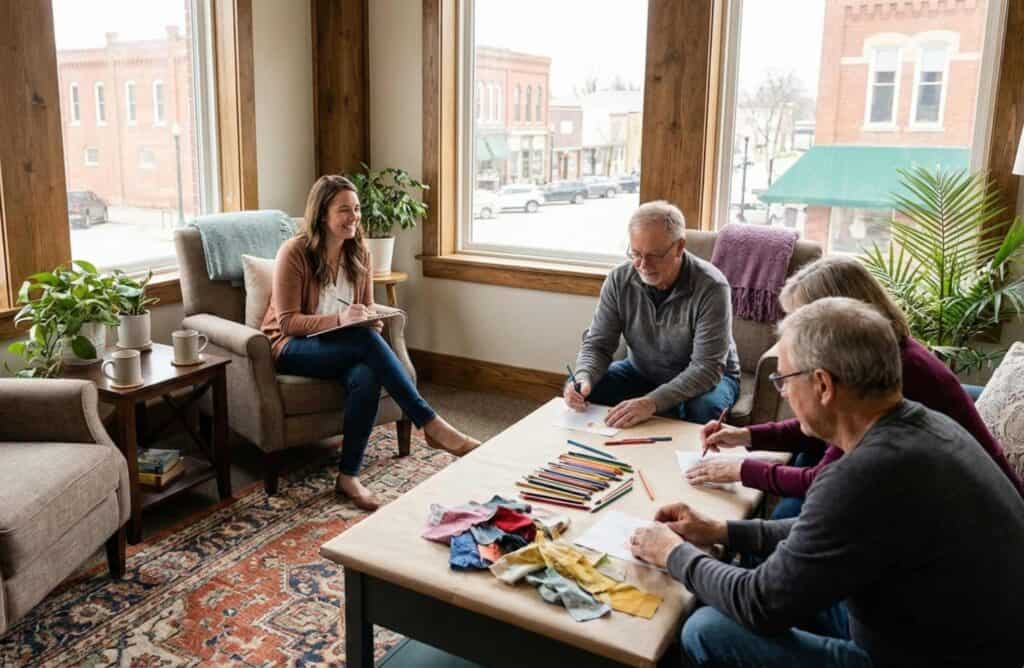
Our art therapy programs are a core part of our treatment plans. They are fully integrated into our intensive outpatient program IOP and partial hospitalization program PHP. These programs offer a level of care that goes far beyond weekly therapy. You receive comprehensive support while still living at home and maintaining your daily life.
Our programs address the exact issues highlighted in research assessing community mental health needs in Indiana. We break down the isolation of mental illness through group therapy and creative connection. By combining outpatient rehab with creative modalities, we treat the whole person.
You do not have to navigate this heavy burden alone. Our credentialed therapists are here to help you translate your pain into healing. If you are ready to explore a different path to recovery, our compassionate team is standing by to guide you.
Our mental health services are designed to help those facing life’s challenges. Whether you’ve been diagnosed with a mental health disorder or are just starting to look for answers, our professionals are here to help.
Frequently asked questions
What is art therapy?
Art therapy is a form of therapy that uses creative expression through visual arts like drawing, collage, and painting to support mental health. Guided by a trained art therapist, this approach blends psychological theory with the creative process to help people process emotions, trauma, and stress. Using art materials such as colored pencils and other tools, individuals create a visual representation of their experiences that gives personal meaning beyond words. Art therapy sessions may take place in a private practice or clinical setting with mental health professionals who support healing. This method helps individuals explore feelings, build self-awareness, and strengthen emotional resilience through active art making.
How does art therapy help with trauma?
Art therapy for trauma helps individuals process difficult experiences tied to a traumatic event, including post traumatic stress and ongoing anxiety. Through creative expression and active art making, people can work through negative emotions and trauma when language fails. A trained art therapist guides the process so individuals can safely explore traumatic memories, create images that reflect their experiences, and improve emotional resilience. This approach supports healing by helping individuals process feelings and reduce stress through structured therapy sessions. Over time, art therapy can help reframe past experiences and support long-term recovery.
What are common art therapy activities?
Common art therapy activities include drawing, collage, clay sculpting, and creating a vision board to explore emotions and experiences. Techniques like mandala drawing and working with art materials such as colored pencils allow individuals to focus, create, and process stress in a structured way. These art therapy activities use the creative process to help individuals explore feelings, develop self-awareness, and build emotional resilience. Each activity encourages creativity while supporting healing and providing a clear final product that reflects personal growth. Art therapy sessions often adapt these techniques to meet individual needs and goals.
Who can benefit from art therapy?
Art therapy can support individuals of different ages dealing with anxiety, trauma, and other mental health concerns. It is often used alongside traditional therapy to help people process emotions, improve focus, and build coping skills through creative arts. Working with an art therapist allows individuals to explore feelings, create meaning from past experiences, and support healing through guided sessions. This approach is helpful for those who want to explore emotions in a different way while building self-awareness and emotional resilience. It can also support personal growth and improve overall mental health.
Do you need to be artistic to try art therapy?
No artistic experience is needed to benefit from art therapy, since the focus is on the creative process rather than the final product. A therapist or art therapist guides individuals through activities that emphasize expression, not skill level. Art therapy encourages creativity, helping individuals explore emotions, process stress, and support healing through simple techniques. The goal is to create a safe space where people can use art materials to express feelings and ideas. Anyone can participate and benefit from this form of therapy, regardless of experience.
How do art therapy programs support mental health recovery?
Art therapy programs use guided creative work to help people express emotions, reduce stress, and process difficult experiences. In art therapy for adults, licensed professionals may use art therapy techniques like painting, collage, journaling, or drawing to build self-awareness and healthier coping skills. These art therapy programs can support anxiety, depression, trauma, and substance use recovery while making emotional expression feel safer. Art therapy for adults may also include group sessions where art therapy techniques help improve communication and personal insight.
What should adults expect from art therapy programs?
Art therapy for adults usually includes structured creative activities led by a trained therapist in a supportive clinical setting. Many art therapy programs combine counseling with art therapy techniques that help individuals explore feelings, manage stress, and understand patterns in their mental health. Art therapy for adults does not require artistic skill because the focus is on healing, not the final artwork. The best art therapy programs personalize care so each person can use creativity to support recovery and emotional growth.
Art therapy for adults to help treat mental health conditions
Healing from emotional pain requires a treatment approach that honors your unique experiences. When words fail, creative expression offers a powerful bridge back to yourself. By exploring your feelings through visual mediums, you actively dismantle the heavy blocks of trauma and anxiety.
This process is not about creating perfect artwork. It is about restoring your sense of inner peace and building the emotional strength you need for daily life. Taking this step is a true act of commitment to your own well-being and to the people who depend on you.
If you are ready to find a new way to process your experiences, please reach out to Red Ribbon Mental Health. You can contact us online or call (317) 707-9706 to discuss how our structured programs can support your specific needs. Let us help you find the right tools to rebuild your life today.
Treatment Center Reviews
Bridget LaRocco
I have been to this facility twice now, for Laser Hair removal and Botox. I saw Kim 2 times now for laser and she has been great, she made me feel really comfortable and…
Bridget LaRocco
I have been to this facility twice now, for Laser Hair removal and Botox. I saw Kim 2 times now for laser and she has been great, she made me feel really comfortable and…
Bridget LaRocco
I have been to this facility twice now, for Laser Hair removal and Botox. I saw Kim 2 times now for laser and she has been great, she made me feel really comfortable and…
Sources
- PubMed Central. (April 2, 2018). The Applied Effectiveness of Clay Art Therapy for Patients … – PMC. PubMed Central.
- Rocky Mountain College of Art + Design. (May 24, 2024). Brushing Away Stress: 21 Art Therapy Activities for Self-Expression …. Rocky Mountain College of Art + Design.
- PubMed Central. (October 20, 2016). Art Therapy and Cognitive Processing Therapy for Combat-Related …. PubMed Central.
- PubMed Central. (March 22, 2019). Strengthening the Healthy Adult Self in Art Therapy: Using Schema …. PubMed Central.
- Indiana University. (February 18, 2024). [PDF] Community Needs Assessment for Southwest Indiana and Mental …. Indiana University.
About the content

Written by: Carli Simmonds. Carli Simmonds holds a Master of Arts in Community Health Psychology from Northeastern University. From a young age, she witnessed the challenges her community faced with substance abuse, addiction, and mental health challenges, inspiring her dedication to the field.
Medical reviewed by: Jodi Tarantino, LICSW. Jodi is an experienced, licensed Independent Clinical Social Worker (LICSW) and Program Director with over 20 years of experience in Behavioral Healthcare, demonstrating expertise in substance use disorders, mental health disorders, crisis intervention, training development, and program development. She is a skilled leader in business development with a Master of Social Work (MSW) in Community and Administrative Practice from the University of New Hampshire.
Red Ribbon Recovery is committed to delivering transparent, up-to-date, and medically accurate information. All content is carefully written and reviewed by experienced professionals to ensure clarity and reliability. During the editorial and medical review process, our team fact-checks information using reputable sources. Our goal is to create content that is informative, easy to understand and helpful to our visitors.

THERAPIES
CONDITIONS WE TREAT
Check if your insurance will cover the cost of mental health treatment