
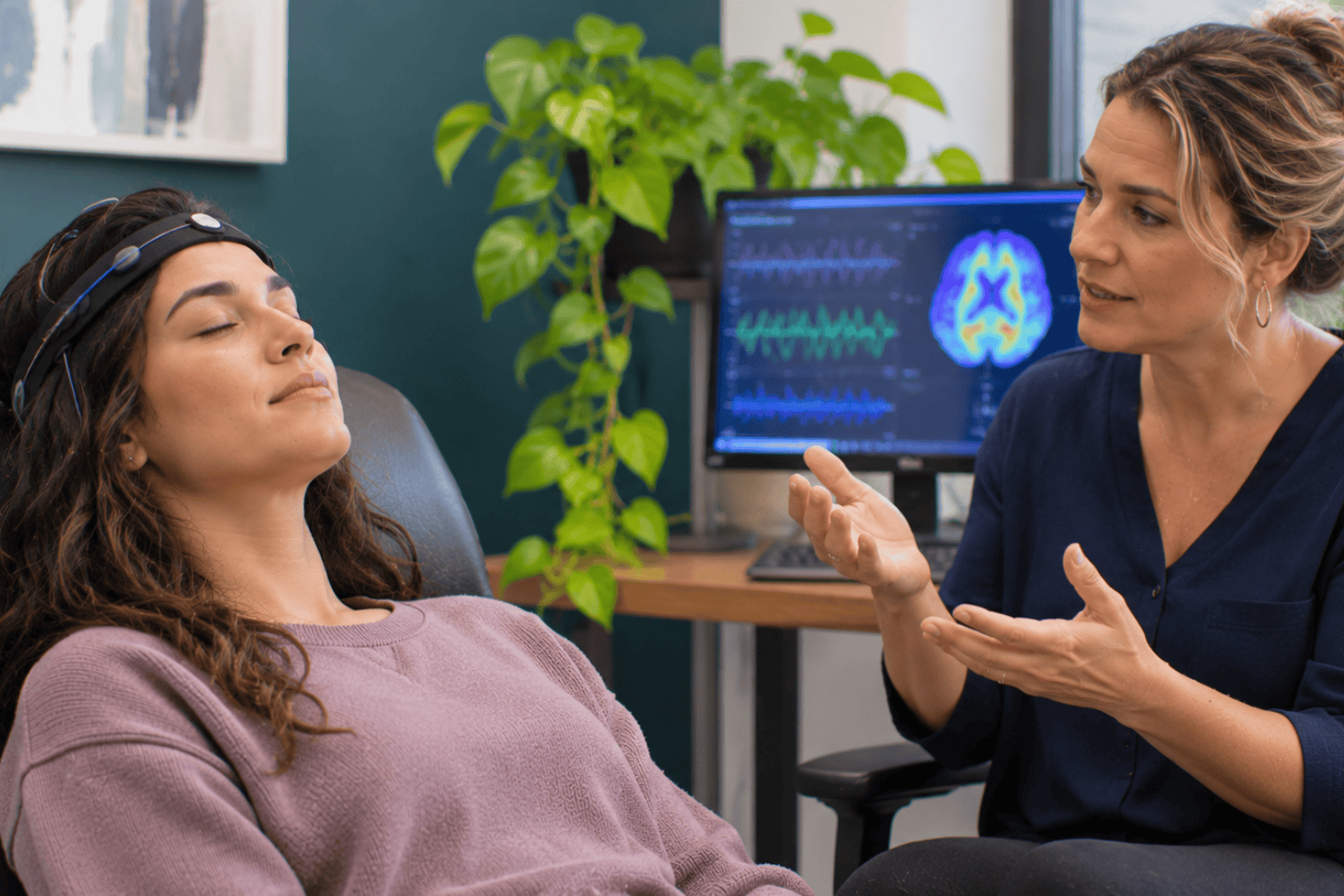
Understanding neurofeedback vs biofeedback begins with how these techniques measure the body’s responses. Biofeedback uses sensors to monitor physiological functions such as heart rate, muscle tension, breathing, and skin temperature. Neurofeedback is a specialized form of biofeedback that measures brainwave activity to support the development of self-regulation skills. Both approaches use real-time feedback to help people recognize patterns that may otherwise go unnoticed. They are non-invasive techniques sometimes incorporated into treatment plans for stress-related symptoms, anxiety disorders, chronic pain, and other concerns affecting mental health and physical well-being. Although neurofeedback and biofeedback share important similarities, their methods, applications, and supporting evidence differ. Understanding these distinctions can help you discuss appropriate options with a qualified healthcare professional.
What are the key differences between neurofeedback and biofeedback?
Both approaches fall within the broader field of mental health therapy and mind-body interventions. The main difference between neurofeedback and biofeedback is what each method measures. Biofeedback encompasses several techniques that monitor physiological responses throughout the body, while neurofeedback focuses specifically on brain activity.
Neurofeedback is often called EEG biofeedback because it commonly uses electroencephalography (EEG) to monitor the brain’s electrical activity. Traditional biofeedback may measure heart rate, breathing, muscle tension, skin temperature, or sweat gland activity.
| Feature | Biofeedback | Neurofeedback |
|---|---|---|
| Primary focus | Physiological responses throughout the body | Brainwave activity |
| Common measurements | Heart rate, breathing, muscle tension, skin temperature | Electrical activity measured through EEG |
| Equipment | Sensors attached to the skin or body | EEG sensors placed on the scalp |
| Feedback | Visual or auditory signals reflecting bodily functions | Visual or auditory signals reflecting brainwave patterns |
| Common applications | Stress management, tension headaches, chronic pain, and relaxation training | Investigational or complementary applications involving attention, sleep, and emotional regulation |
| Primary goal | Improve awareness and regulation of physical responses | Practice regulation of selected brain activity patterns |
Neither approach is automatically more effective than the other. The most appropriate choice depends on individual symptoms, treatment goals, and the strength of available evidence for the condition being addressed.
Biofeedback focuses on physiological functions
Biofeedback trains individuals to recognize and influence bodily functions that often change automatically during stress. These may include blood pressure, breathing patterns, blood flow, muscle tension, and heart rate.
By observing these responses, people can practice relaxation techniques and learn how different thoughts, emotions, or behaviors affect their physical state.
Neurofeedback focuses on brain activity
Neurofeedback training measures selected patterns of electrical activity in the brain. Software translates these measurements into real-time visual or auditory signals that respond to changes during a session.
The goal is to reinforce certain patterns of brain activity through repeated practice. However, researchers are still investigating how reliably these changes translate into lasting improvements in mental health symptoms or cognitive performance.
How the two approaches overlap
Both neurofeedback and biofeedback use feedback-based learning to develop self-regulation skills. Each relies on sensors, repeated training sessions, and information about physiological processes.
Their shared emphasis on the mind-body connection makes them relevant to discussions of mental wellness, but their clinical applications should be evaluated individually.
What is biofeedback therapy?
Biofeedback therapy is a non-invasive technique that uses sensors to monitor physiological functions and display the information in real time. The goal is to help individuals recognize their body’s responses and practice techniques that may improve physical relaxation and stress management.
During stressful situations, the nervous system may increase heart rate, change breathing patterns, and create muscle tension. Biofeedback makes some of these responses visible, allowing individuals to observe how their bodies react and whether relaxation exercises influence those measurements.
How does biofeedback work?
Biofeedback equipment measures physiological signals and converts them into visual or auditory feedback. For example, a screen may display changes in heart rate while someone practices paced breathing.
Other systems measure muscle tension through electromyography (EMG), skin temperature through thermal sensors, or sweat gland activity through electrodermal measurements, sometimes called galvanic skin response.
The feedback allows individuals to practice adjusting their responses through breathing exercises, muscle relaxation, and other techniques. With practice, some people become better at recognizing physical stress signals without relying on equipment.
Common types of biofeedback
Different biofeedback methods focus on different physiological systems:
- Heart rate variability biofeedback. Uses heart rate and breathing measurements to support paced breathing and autonomic regulation.
- Electromyographic biofeedback. Measures muscle tension and may help individuals practice releasing unnecessary muscular activity.
- Thermal biofeedback. Monitors skin temperature, which can change with peripheral blood flow and stress responses.
- Electrodermal biofeedback. Tracks changes in sweat gland activity associated with physiological arousal.
The most appropriate method depends on the symptoms being addressed and the clinician’s assessment.
Biofeedback for anxiety disorders and stress
Anxiety disorders can involve both psychological distress and physical symptoms, including muscle tension, rapid breathing, and a racing heartbeat.
Biofeedback may help individuals recognize these physiological responses and practice relaxation techniques. Some evidence supports its use for stress-related symptoms, although outcomes vary and it should not replace established treatments when those are indicated.
For broader anxiety management, anxiety treatment may involve psychotherapy, medication, and additional strategies selected according to individual needs.
How can biofeedback support physical health and mental wellness?
Biofeedback is used in several areas of physical health and stress management. By increasing awareness of physiological responses, it may help individuals practice techniques that reduce tension, improve relaxation, and support overall well-being.
Biofeedback may be more helpful for certain conditions than others. A qualified healthcare professional can help determine whether a particular technique is appropriate for an individual’s symptoms and treatment goals.
Muscle tension, headaches, and chronic pain
Muscle-based biofeedback may help individuals recognize when they are tightening muscles unnecessarily. This can be useful when addressing tension headaches, certain chronic pain conditions, or stress-related muscle discomfort.
Biofeedback is also used as part of some pain management approaches. Pain reduction may result from improved relaxation, changes in muscle activity, and better awareness of the body’s responses rather than direct treatment of the underlying cause.
Heart rate, blood pressure, and stress reduction
Heart rate variability biofeedback combines real-time heart rate measurements with paced breathing exercises. The goal is to improve awareness of autonomic responses and develop more consistent breathing patterns.
Some research suggests potential benefits for stress reduction and anxiety symptoms. Biofeedback has also been studied in people with high blood pressure, but it should not replace prescribed hypertension treatment or routine medical monitoring.
Sleep patterns and relaxation
Stress and physiological arousal can interfere with sleep regulation. Biofeedback techniques may help some individuals develop relaxation skills that support healthier bedtime routines.
However, evidence for treating sleep disorders varies, and persistent insomnia or other sleep concerns may require additional assessment. Biofeedback is best considered one possible component of a comprehensive approach rather than a guaranteed solution.
Can biofeedback be practiced through telehealth?
Some forms of biofeedback can be supported remotely using compatible sensors, wearable devices, and digital platforms. These tools may allow individuals to practice breathing exercises, observe heart rate changes, and review physiological responses outside a traditional clinical setting.
However, consumer wellness devices are not interchangeable with clinical biofeedback equipment. Measurement accuracy, professional oversight, and the technology’s intended purpose can vary significantly.
Using technology for home-based practice
Wearable heart rate monitors and breathing applications may help individuals practice relaxation and track changes over time. Some clinical systems also support supervised remote training when appropriate equipment and professional guidance are available.
Telehealth mental health can provide another way to access psychological support, including counseling and discussions about stress management. Telehealth appointments do not necessarily include biofeedback equipment or specialized physiological monitoring.
Remote options should be evaluated according to the person’s symptoms, treatment goals, technology access, and need for clinical supervision.
What is neurofeedback therapy?
Neurofeedback therapy is a specialized form of biofeedback that measures electrical activity in the brain and provides real-time feedback about selected brainwave patterns. It is sometimes called EEG biofeedback because electroencephalography is commonly used to collect this information.
The approach is based on the idea that repeated feedback may help individuals learn to influence certain brain activity patterns. Researchers continue to study whether these changes improve emotional regulation, attention, sleep, and other aspects of mental health.
Understanding neurofeedback and brainwave activity
The brain produces electrical signals through communication between neurons. EEG sensors placed on the scalp detect patterns associated with this activity.
Different brainwave frequencies can be observed during wakefulness, attention, relaxation, and sleep. However, no single frequency reliably identifies a specific mental health disorder or determines whether someone’s brain is functioning optimally.
Neurofeedback training uses selected EEG measurements to create feedback that responds to changes in brain activity. The goal is to encourage learning through repeated sessions rather than directly stimulating the brain.
How does neurofeedback therapy work?
During neurofeedback training, sensors monitor brainwave activity while software provides visual or auditory cues. A video, sound, or other display may change when the measured activity moves toward a selected training target.
Some protocols use principles of operant conditioning, in which feedback reinforces particular responses. The individual may not consciously control every change, and the mechanisms behind clinical improvements remain an active area of research.
Neurofeedback does not typically deliver electrical stimulation through EEG sensors. These sensors record activity rather than sending therapeutic electrical currents into the brain.
What happens during a neurofeedback session?
A typical session may include the following steps:
- Initial assessment. Reviewing symptoms, treatment goals, relevant medical history, and whether neurofeedback is appropriate.
- Sensor placement. Positioning EEG sensors on the scalp to monitor electrical activity.
- Baseline recording. Collecting initial measurements to help establish training parameters.
- Feedback training. Using visual or auditory signals that respond to selected brainwave patterns.
- Progress review. Discussing the experience, evaluating symptoms, and considering whether further sessions are appropriate.
Session length and frequency vary by protocol. Some programs involve repeated training over several weeks or months, but there is no universal schedule or guaranteed number of sessions required for improvement.
Can neurofeedback improve mental health and cognitive function?
Neurofeedback has been investigated for several mental health conditions, including attention-deficit/hyperactivity disorder (ADHD), anxiety disorders, post-traumatic stress disorder (PTSD), and sleep-related difficulties.
Some studies report improvements in attention, emotional regulation, or other symptoms. However, results vary across research designs, training protocols, and patient populations. More high-quality research is needed to establish which applications provide reliable clinical benefits.
Neurofeedback for ADHD and improving focus
Neurofeedback training is sometimes explored as a complementary approach for ADHD symptoms, including difficulty sustaining attention and regulating activity levels.
Although certain studies have reported benefits, findings from more rigorously controlled research are mixed. Neurofeedback is not an established replacement for evidence-based ADHD treatments, including appropriate medication and behavioral interventions. It may be considered as a complementary approach in selected circumstances.
Anxiety, emotional regulation, and PTSD
Neurofeedback has also been studied for anxiety symptoms, emotional regulation, and trauma-related difficulties. Researchers are investigating whether feedback-based training can influence patterns associated with stress and attention.
For people with PTSD or other trauma-related conditions, evidence-based psychotherapy remains central to treatment planning. Neurofeedback may be considered an adjunct in selected circumstances, but evidence is not sufficient to establish it as a first-line treatment.
Sleep regulation and cognitive performance
Some neurofeedback protocols aim to influence brainwave patterns associated with attention, relaxation, or sleep. These approaches are being studied for their potential effects on sleep quality and cognitive performance.
Changes in brainwave activity during neurofeedback do not necessarily lead to lasting improvements in attention, sleep, or everyday functioning. Although the brain can adapt through neuroplasticity, further research is needed to understand the long-term benefits of neurofeedback training.
How do you choose between biofeedback and neurofeedback?
Choosing between biofeedback and neurofeedback depends on the concerns being addressed, the evidence supporting each approach, and individual treatment goals.
Biofeedback may be considered when physical tension, stress-related symptoms, or specific physiological responses are prominent. Neurofeedback may be discussed when someone is interested in brain-based feedback training, although its effectiveness for many psychiatric and cognitive conditions remains uncertain.
Matching treatment to symptoms
A qualified healthcare professional can evaluate whether feedback-based techniques are appropriate for concerns such as muscle tension, chronic pain, anxiety, sleep difficulties, or attention problems.
Treatment selection should also account for medical history, existing diagnoses, current medications, and the availability of established therapies with stronger evidence.
Combining feedback training with mental health therapy
Biofeedback or neurofeedback may sometimes be incorporated alongside psychotherapy, relaxation training, or other clinical interventions.
For example, cognitive behavioral therapy can help individuals recognize negative thoughts and develop healthier coping strategies. Feedback-based techniques may complement these skills by increasing awareness of certain physiological responses.
When mental health and substance use concerns overlap
Anxiety, trauma-related symptoms, depression, and substance use disorders can interact in ways that complicate treatment. Some individuals may use alcohol or other substances to cope with persistent distress, making coordinated assessment particularly important.
When a mental health condition occurs alongside a substance use disorder, dual diagnosis treatment may help address both concerns. Biofeedback and neurofeedback should not be considered substitutes for comprehensive treatment of either condition.
Understanding the limits of each approach
Neither biofeedback nor neurofeedback is universally effective, and results depend on the specific method and condition being treated.
Before beginning training, it is reasonable to ask about the supporting research, clinician qualifications, expected costs, treatment duration, and how progress will be evaluated. Clear expectations can help people make informed decisions without relying on promises of guaranteed results.
Finding support for mental health and self-regulation
Understanding neurofeedback vs. biofeedback can help you make more informed decisions about managing stress, physical tension, and mental health symptoms. Both approaches use real-time feedback to encourage self-regulation, but their applications and supporting evidence differ.
Biofeedback may help with certain physical stress responses, while neurofeedback continues to be studied for its potential effects on attention, emotional regulation, and other concerns. Neither approach replaces a comprehensive assessment or established treatment when additional care is needed.
Taking the next step toward mental wellness
If anxiety, chronic stress, sleep difficulties, or other mental health conditions are affecting daily life, professional guidance can help clarify your options. A personalized assessment can identify appropriate therapies and determine whether feedback-based techniques may complement a broader treatment plan. Red Ribbon Recovery Mental Health provides educational information about mental health conditions and treatment approaches. To learn more about available options, contact us by calling (317) 707-9706.
Frequently asked questions
Yes. Neurofeedback is a specialized form of biofeedback that uses brain activity measurements rather than focusing primarily on peripheral bodily functions. Traditional biofeedback may monitor heart rate, muscle tension, breathing, or skin temperature, while neurofeedback commonly uses EEG sensors to measure brainwave activity. Both approaches provide real-time feedback intended to support self-regulation, although their clinical applications and supporting evidence differ.
Biofeedback may help individuals recognize physiological responses associated with anxiety, including muscle tension, rapid breathing, and changes in heart rate. Through guided relaxation and breathing exercises, some people learn to manage these reactions more effectively. Heart rate variability and muscle-based biofeedback have been studied for stress-related symptoms, but results vary. Persistent anxiety disorders may require additional treatment, including psychotherapy or medication.
Researchers are investigating whether repeated neurofeedback training produces lasting changes in brain activity, attention, or emotional regulation. Although some studies report improvements, the evidence remains inconsistent across conditions and training methods. Neuroplasticity allows the brain to adapt through experience, but this does not guarantee permanent benefits from neurofeedback. Long-term outcomes depend on the individual, protocol, and symptoms being addressed.
Both approaches are generally considered non-invasive when appropriately administered. However, safety and suitability depend on individual circumstances, equipment, and clinical supervision. Some individuals may experience temporary discomfort, frustration, fatigue, or symptom changes during training. Anyone managing significant psychiatric symptoms, neurological conditions, or complex medical concerns should discuss these techniques with a qualified healthcare professional before beginning.
Neither approach should automatically replace established mental health treatment. Biofeedback may complement stress management, relaxation techniques, and psychotherapy, while neurofeedback remains an emerging or adjunctive intervention for many psychiatric conditions. Treatment decisions should reflect the strength of available evidence and individual needs. When symptoms affect relationships, work, or overall well-being, a comprehensive mental health evaluation can help determine the most appropriate combination of interventions.
Sources
- National Center for Complementary and Integrative Health. (n.d.). Relaxation techniques: What you need to know.
- National Library of Medicine. (n.d.). Biofeedback. StatPearls.
- National Library of Medicine. (2010). Biofeedback in medicine: Who, when, why and how?.
- National Library of Medicine. (2017). EEG-neurofeedback as a tool to modulate cognition and emotion.
- National Library of Medicine. (2018). Review of the therapeutic neurofeedback method using EEG.
- National Library of Medicine. (2022). Neurofeedback and neural self-regulation: A new perspective based on operant conditioning.