
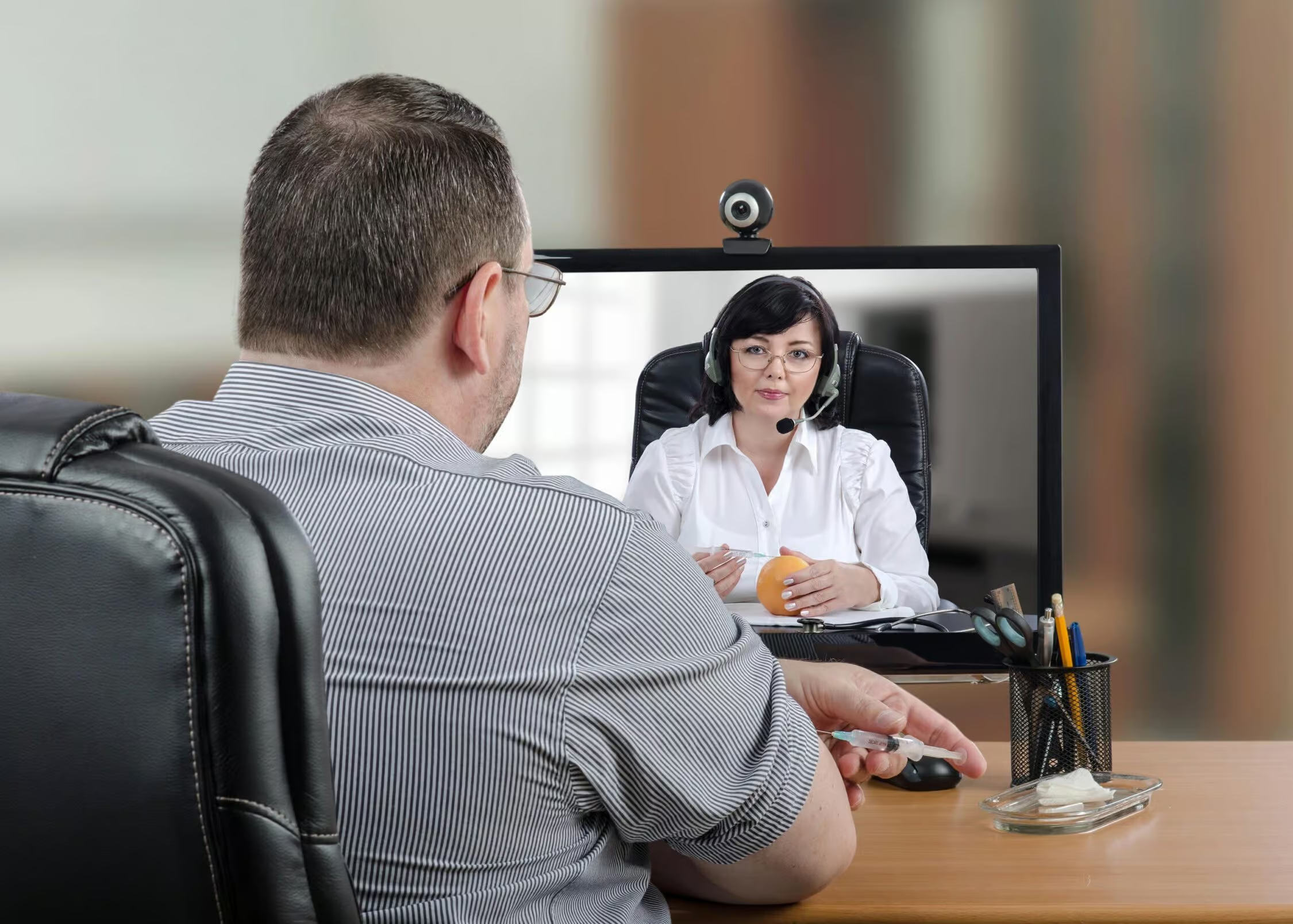
Is telehealth therapy as effective as in person therapy? Telehealth therapy is as effective as in-person sessions for most common concerns, including anxiety and depression. If you are weighing whether to meet a therapist face to face or connect through a screen, the research is reassuring: virtual care delivers comparable outcomes without the commute. Deciding whether telehealth therapy is as effective as in-person comes down less to the format and more to what fits your life. Knowing both options work means you can choose the approach that feels most comfortable and practical for you.
Is telehealth therapy as effective as in-person sessions?
People often ask a very valid question before starting treatment. The primary concern is whether the intervention actually works. You might naturally wonder, is telehealth therapy as effective as in-person? The clear, scientifically backed answer is yes. For most people and conditions, telehealth mental health treatment is as effective as in-person therapy.
It’s completely normal to feel initial skepticism about virtual care. You might worry that staring at a screen feels too cold or disconnected. However, studies consistently show equivalent outcomes for anxiety, depression, and PTSD.
Mental health conditions respond remarkably well to digital interventions. Professionals across the country rely on virtual care every single day. This format provides excellent results without the need to sit in a physical office.
Medical research heavily supports this reassuring conclusion. Experts have looked closely at patient outcomes across many different clinical populations. A major 2022 review published in JAMA Psychiatry examined this exact issue, comparing outcomes for people receiving virtual mental health treatment against those attending in person. They found no significant differences in symptom severity between telehealth and face-to-face therapy immediately after treatment.
The standardized mean difference in that study was only 0.05. In clinical statistics, this means the difference between the two formats is virtually zero. You do not lose therapeutic value by choosing a video call.
These findings offer real peace of mind for anyone seeking help. You do not have to sacrifice quality for convenience, and both options deliver the care you need to feel better.
Key findings
Clinical research details very specific outcomes regarding telehealth therapy effectiveness. Patients achieve similar improvements in symptom severity regardless of the format. A wealth of randomized controlled trials confirms these positive results. Virtual sessions allow people to get specialized treatment without leaving home. The National Institute on Drug Abuse notes that effective psychotherapy can adapt to various delivery methods.
Follow-up studies show comparable sustained improvement rates over long periods of time. For example, six-month check-ins reveal lasting benefits for remote patients. Studies indicate that roughly 83% of telehealth participants report sustained improvement. This compares closely to about 73% of face-to-face participants reporting improvement in similar trials.
You can expect excellent anxiety treatment outcomes through virtual care. Symptoms of panic, worry, and social fear decrease steadily over the weeks. Long-term healing is absolutely possible without ever visiting a clinic. The research proves that your brain processes the therapeutic work just as deeply online.
Effectiveness depends on the therapeutic relationship
The success of any psychotherapy relies heavily on the therapeutic alliance. This clinical term describes the foundational trust between a patient and their therapist. A strong working alliance is crucial for meaningful progress. You must feel entirely safe, respected, and understood by your provider.
Some people worry that this vital bond cannot form over video. They fear the technology will act as an emotional barrier. Fortunately, studies indicate this trust can be established just as effectively online as in person. Your therapist is highly trained to listen, validate, and connect with you. The screen does not block human empathy or genuine care.
In fact, some patients feel more willing to open up from home. Being in a familiar space can actually speed up the bonding process. You can build a powerful, life-changing relationship from your own living room. The connection is ultimately built on words, understanding, and shared goals. The delivery method is simply the vehicle for that connection.
Understanding your options: virtual therapy vs. in-person
Clinical data strongly supports the effectiveness of virtual care. Beyond the research, practical lifestyle factors shape the right choice for you. The choice between virtual therapy vs. in-person depends entirely on your daily life. You should frame the choice around your unique environment, schedule, and comfort level.
You are the primary decision-maker in your own mental health care journey. Consider what a typical therapy session actually looks like for you. Face-to-face sessions require travel, reliable transportation, and time in a waiting room. Online sessions allow you to simply open your laptop from your kitchen table. You must decide which patient experience feels more sustainable for your current season.
Some people absolutely thrive in a dedicated clinical space. The physical transition helps their brain prepare for the session. Others prefer the immediate comfort of their favorite chair at home. There is no wrong answer when seeking professional mental health support. Your commitment to showing up and doing the work is what truly matters.
Benefits of telehealth therapy
Virtual care offers incredible advantages for busy individuals. It removes many common logistical hurdles that prevent people from seeking help. The convenience factor alone has transformed how people access mental health resources.
- Ultimate convenience. You can attend sessions during a lunch break or while the baby naps safely nearby.
- Reduction in transportation barriers. This is especially relevant in rural settings where specialty clinics are miles away.
- Scheduling flexibility. You can often find appointment times that fit perfectly around your demanding work shifts.
- Higher attendance rates. Telehealth often boasts higher attendance rates because logging in requires far less effort than driving.
- Less social stigma. Virtual care is excellent for reducing the social stigma associated with visiting a clinic publicly.
You can enjoy all these virtual therapy benefits while making real, measurable progress. Telehealth respects your time and your need for discretion.
Benefits of in-person therapy
Traditional office visits still hold immense value for many people. Face-to-face care provides a distinct environment that some patients strongly prefer. It removes you from the chaos of your daily routine.
- A deeper sense of physical presence. In-person sessions can offer a grounding experience that video simply cannot replicate.
- A neutral, private space. This is perfect for those who cannot escape distractions at home or lack adequate privacy.
- Clear psychological boundaries. Leaving the house helps separate your deep therapeutic work from your relaxing home life.
- Intensive stabilization. In-person care is generally preferred for severe mental health crises or individuals needing intensive stabilization.
An in-person setting matters when a situation calls for close, on-site support and safety. Severe active risks always require direct observation and a higher level of care than any outpatient format can provide.
Comparing the formats: online therapy vs. in-person
A clear side-by-side look at these two options makes the differences easy to digest. You can then weigh what matters most to your specific lifestyle.
| Consideration | Online therapy | In-person therapy |
|---|---|---|
| Convenience and travel | Highly convenient, no commute needed, saves money on gas and time. | Requires travel time, reliable transportation, and parking logistics. |
| Privacy and space | Requires finding a quiet, confidential space in your own home. | Provides a guaranteed private, neutral space away from home distractions. |
| Ideal use cases | Great for mild to moderate symptoms and incredibly busy schedules. | Better for severe crisis, active risk, or a complete lack of home privacy. |
| Therapeutic bond | Builds strong rapport quickly, reduces stigma, and lowers initial anxiety. | Allows for deeper physical presence and clear observation of body language. |
Neither format is universally superior to the other. Both online therapy and in-person therapy deliver excellent patient outcomes. The right choice depends entirely on your current life season.
If you work long hours, online therapy might save your sanity. If your house is loud and chaotic, an office visit might provide a necessary peaceful escape. The client always remains at the very center of the care plan.
Take a moment to weigh these considerations carefully. Think about your local transportation options and your daily routine. Reflect on where you feel the most secure and open to talking. Your physical comfort will directly impact how well the therapy works for you.
Can you do both in-person and telehealth therapy?
Patients do not always have to choose just one format. You are not locked into a rigid path forever. Many individuals actually prefer a hybrid model of care. This blended approach utilizes the absolute best features of both physical and remote therapy.
A hybrid approach means combining virtual convenience with occasional in-person visits. This strategy can help build initial rapport with your therapist face-to-face. Once that foundational trust is firmly established, you can switch to video calls. This maintains long-term flexibility for your busy schedule.
Structured mental health services frequently utilize this exact flexibility today. It helps to maintain intensive support without completely overwhelming the patient. For example, partial hospitalization hybrid programs offer intensive care with manageable daily logistics. You can attend group educational sessions online and visit the clinic for specific individual therapies.
This flexibility keeps you consistently engaged in your treatment plan. If you have a busy week with family, you can log in from home. If you need a deeper human connection, you can drive to the office. The goal is always to make treatment fit your life, not the other way around.
Modern hybrid models take evidence-based therapies and make them highly accessible. You get the robust clinical support of a dedicated intensive program. At the exact same time, you retain the autonomy to manage your daily life. This balanced method reduces burnout and keeps you moving forward.
How to decide which option is right for you
Making the right choice for your care requires some honest personal reflection. You must guide yourself through a few practical decision-making steps. The choice ultimately comes down to personal preference, individual circumstances, and clinical needs. It is rarely about a difference in underlying treatment quality.
In Indiana, we strongly believe in stepping up for our communities. However, you absolutely have to take care of yourself first. Taking care of yourself means you can take care of your family and community later. Seeking telehealth services or a traditional clinical approach is a profound act of strength.
Think about your daily reality and how you perceive care. What feels most realistic for you to commit to every single week? Consistency is the absolute secret to seeing real results in therapy. Choose the path that removes the most logistical friction from your life.
Assessing your mental health needs
You must first consider the current severity of your symptoms. Standard anxiety and depression generally respond excellently to telehealth. You can process these heavy feelings very effectively through a secure video screen. However, acute crises may require the immediate safety of a physical facility.
If you feel actively unsafe, an in-person environment provides crucial security. Common comparisons like virtual therapy vs. in-person for PTSD show both work well. Both have proven highly effective, but individual comfort is the deciding factor. If discussing trauma makes you feel ungrounded, a physical office might feel much safer.
Evaluating your home environment
Look around your living space right now. Ask yourself if you truly have a private, uninterrupted space. You need a room with a closed door and a strong internet connection. Confidentiality is vital for you to open up safely to your therapist.
If you live with roommates or a large family, privacy might be very scarce. Sometimes simply leaving the house serves as a helpful transition period. Driving to a clinic gives you time to mentally prepare for heavy emotional work. The drive home then lets you decompress before facing your family again.
In-person vs. virtual therapy is not one-size-fits-all
Standard weekly therapy is not the only option available to you. Some seasons of life simply demand more intensive, structured interventions. For those in Indiana facing significant mental health hurdles, intensive programs provide crucial help.
Programs like partial hospitalization programs (PHP mental health) or intensive outpatient programs (IOP mental health) provide a much higher level of structured support. They use evidence-based approaches led by a skilled mental health professional. These programs surround you with professional care multiple days a week.
Red Ribbon Mental Health is a trusted, community-anchored partner for these intensive needs. We deeply understand the specific challenges Hoosiers face when seeking comprehensive treatment. We provide the robust support required to help you reclaim your life and your future.
Starting therapy is what matters most
Whether you ultimately choose online therapy vs. in-person, the most crucial step is simply reaching out for help. Analyzing the clinical data and comparing formats is a smart way to prepare. However, taking action is the only thing that creates true, lasting change. You deserve to feel better, and professional mental health care can get you there.
Delaying care is completely unnecessary when you have so many accessible options. Telehealth provides immediate, clinically equivalent access to highly expert providers. You do not have to wait months for an open office slot across town. You can begin working on your recovery right now from your own home.
The long-term outcomes of starting therapy are profoundly positive. Getting mental health treatment is a brave act of commitment to oneself and one’s community. It takes immense courage to admit you need a helping hand. Doing so makes you a stronger, healthier presence for the people you love.
We are here to walk alongside you on this challenging journey. You do not have to navigate these heavy feelings in isolation anymore. There is a supportive, deeply connected community ready to welcome you with open arms.
Finding the right therapy option for you
You have the power to take control of your well-being today. Reach out to Red Ribbon Mental Health to discuss which care format makes the most sense for you, or connect with our compassionate team right now by calling (317) 707-9706. We are ready to listen, answer your questions, and help you build a plan for feeling like yourself again. Contact us now.
Frequently asked questions
Yes, telehealth therapy can be as effective as in-person therapy for many mental health conditions, including anxiety and depression. Both telehealth and traditional therapy can use evidence-based approaches to support meaningful change. However, the best format depends on the person’s symptoms, treatment needs, preferences, and ability to safely participate in virtual sessions.
Telehealth therapy offers many benefits, including increased access to mental health services, greater scheduling flexibility, and the ability to attend sessions from a familiar environment. Virtual therapy can be especially helpful for people in rural areas or underserved communities with limited access to mental health providers. Some clients may also find it easier to fit online sessions into their day, such as during a lunch break.
In-person care may be more appropriate for some people with severe mental health conditions, particularly when symptoms require closer observation, crisis support, or additional medical care. Being in the same room also allows therapists to observe body language and other nonverbal cues more directly. A licensed mental health provider can help determine whether in-person services, telehealth services, or a hybrid model is appropriate.
Online therapy can present challenges such as technology problems, privacy concerns, and difficulty establishing an emotional connection through video calls. Clients also need a reliable internet connection and a private location where they feel safe discussing difficult topics. For some people, visiting a therapist’s office provides separation from daily life that makes it easier to focus during therapy sessions.
Depending on the mental health provider and available services, some clients can use a hybrid model that combines virtual sessions with in-person visits. For example, someone may primarily attend online therapy while scheduling in-person sessions when their treatment needs change. This flexibility can help clients maintain access to support while choosing the format that works best at different points in treatment.
Sources
- National Institute on Drug Abuse. (January 5, 2025). Treatment approaches for drug addiction. National Institute on Drug Abuse.
- McHugh, R. K., Hearon, B. A., & Otto, M. W. (2010). Cognitive behavioral therapy for substance use disorders. The Psychiatric Clinics of North America, 33(3), 511–525.